 1 / 1
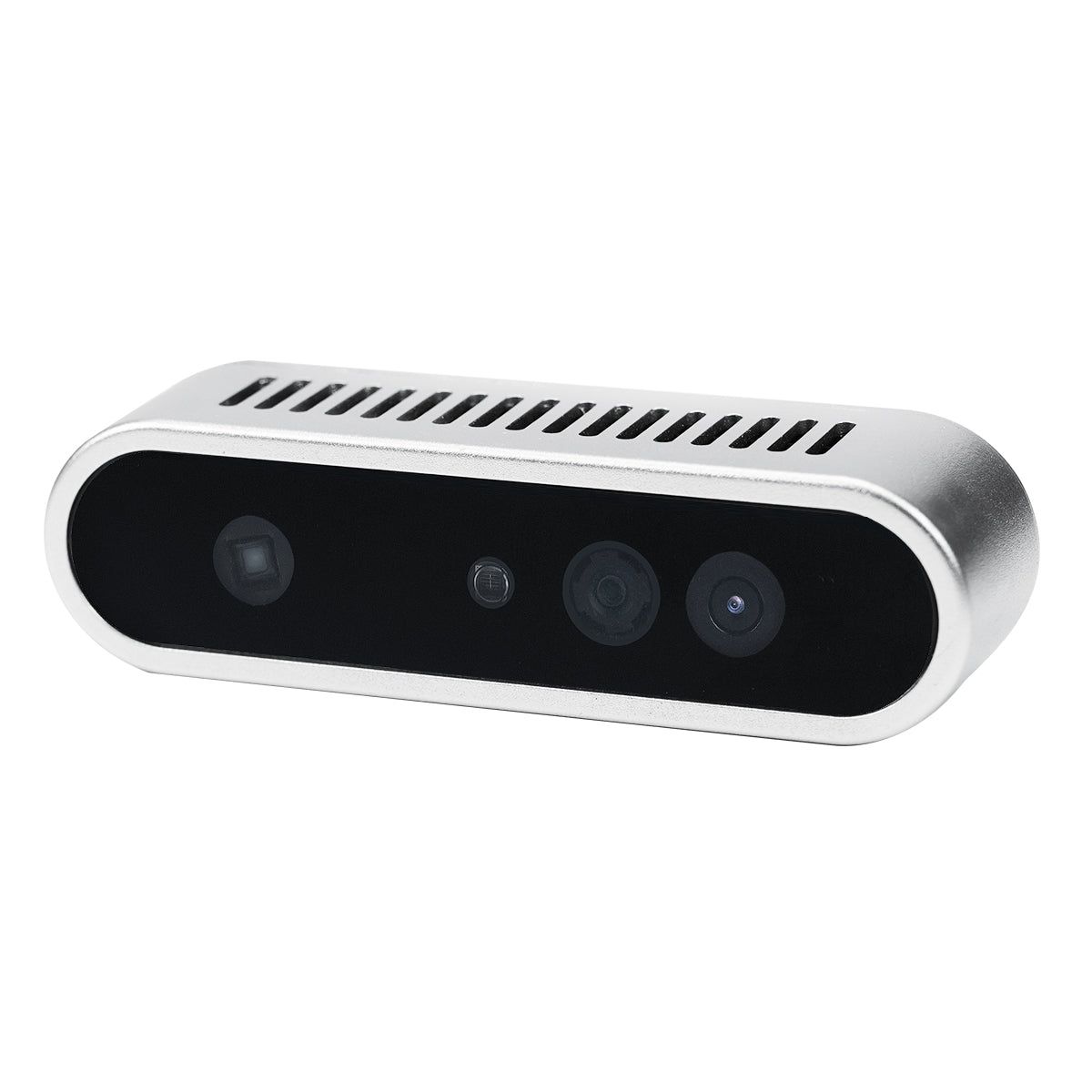
1 / 1Aurora930 Pro 3D Depth Camera
A compact RGB-D structured-light camera for robotic vision, 3D perception and point-cloud applications. The onboard depth processor produces aligned colour, depth and infrared streams, making it suited to RGB-D sensing, VSLAM, scene reconstruction, object positioning and human-feature recognition without placing the full depth-computation load on the host computer. Its aluminium-alloy enclosure and mounting holes support integration on mobile robots, arms and development rigs.
- 0.15–3 m depth sensing: Designed for close-range robot vision, positioning, manipulation and 3D capture.
- 640 × 400 at 12 fps: Depth, RGB and infrared streams use a consistent imaging specification.
- Wide illumination range: Official rated operating illumination spans 3 to 80,000 lux.
- Integrated low-power design: Average device power consumption is rated below 1.6 W.
Price
US$149.99
Shipping options and final delivery cost are shown at checkout.
Depth processing
ASIC depth computation with ISP image processing
Depth processing and image signal processing are integrated in the camera module, which outputs depth, colour and infrared data for 3D perception.
- 16-bit Raw depth data
- NV12 RGB data
- 8-bit Raw infrared data
Imaging range
Built for close-range robotic 3D perception
Its 0.15–3 m operating range, 74° × 51° field of view and 640 × 400 at 12 fps streams support point clouds, VSLAM, scene reconstruction and positioning.
- 40 mm baseline
- ±8 mm at 1 m depth accuracy
- Hardware depth-to-colour alignment
Integration
Compact module for common development platforms
The 76.5 × 20.7 × 21.8 mm aluminium-alloy module uses a USB 2.0 wafer connector and supports Linux, ARMv8, ROS and Windows.
- Average power below 1.6 W
- USB OTA firmware updates
- Raspberry Pi, Jetson, PC and industrial PC support
Related tutorials
Build with your parts
ROS 2 Camera and OpenCV Extension
Connect the CSI camera, publish images and process a first frame with OpenCV.
Read tutorialMoveIt 2 for a 6-DOF Arm: Planning and Safety Limits
Configure MoveIt 2 for joint and pose planning with basic safety limits.
Read tutorialProduct details
Everything you need to evaluate the fit.
Clear product information, technical specifications and compatibility details—kept separate from the purchase decision.
Overview
A compact RGB-D structured-light camera for robotic vision, 3D perception and point-cloud applications. The onboard depth processor produces aligned colour, depth and infrared streams, making it suited to RGB-D sensing, VSLAM, scene reconstruction, object positioning and human-feature recognition without placing the full depth-computation load on the host computer. Its aluminium-alloy enclosure and mounting holes support integration on mobile robots, arms and development rigs.
Technical specifications
Interface
USB 2.0 wafer connector
Dimensions
76.5 × 20.7 × 21.8 mm
Depth range
0.3–3 m
Role in kit
RGB-D visual perception
Laser safety
Class 1
Power supply
5 V ±10%, 1.5 A
Compatibility
Linux, ARMv8, ROS, Windows
Included with
MentorPi T1 Advanced and LanderPi Advanced
Depth accuracy
±8 mm at 1 m
IR data format
8-bit Raw
RGB data format
NV12
Depth data format
16-bit Raw
Power consumption
< 1.6 W average
Depth / RGB stream
640 × 400 at 12 fps
Operating humidity
0–95% RH, non-condensing
Operating illuminance
3–80,000 lux
Operating temperature
−10 to 55 °C
Horizontal field of view
74°
Shipping & support
Choose your destination at checkout to see the available shipping methods. Need integration advice before ordering? Our support team can help you choose compatible components.
In the box
Package contents
Aurora930 Pro depth camera module
Refer to the actual shipment for final package contents.
Expert support
Frequently asked questions
What is the effective depth range?
The official rated working distance is 15–300 cm. Actual results depend on material, reflectance and ambient illumination.
Which image streams can it output?
It outputs 16-bit Raw depth, NV12 RGB and 8-bit Raw infrared data. The official specification lists 640 × 400 at 12 fps for all three streams.
Which systems are supported?
Official materials list Linux, ARMv8, ROS and Windows, with SDK, ROS1 and ROS2 resources and examples.
Is it suitable for difficult lighting?
The official operating-illumination specification is 3–80,000 lux. Validate performance for the intended lighting, material and mounting angle.